The digital world is changing at an incredible rate. As a rule, system developers release critical infrastructure updates regularly to improve software frameworks, to make enterprise operations more efficient, and to make the data more synchronized in real time. As a complex digital systems manager, you’re likely aware of how keeping tools up to date prevents devastating system vulnerabilities. The most significant enterprise-level software release in the technical communities lately is wohiurejozim2.6.3.0.
This system enhancement presents a huge transformation in the manner in which contemporary enterprises manage their backend web applications. It is all about operational efficiency, fast database computation and highly customized data visual dashboards. This extensive technical guide explains all the facts about this key developmental stage.
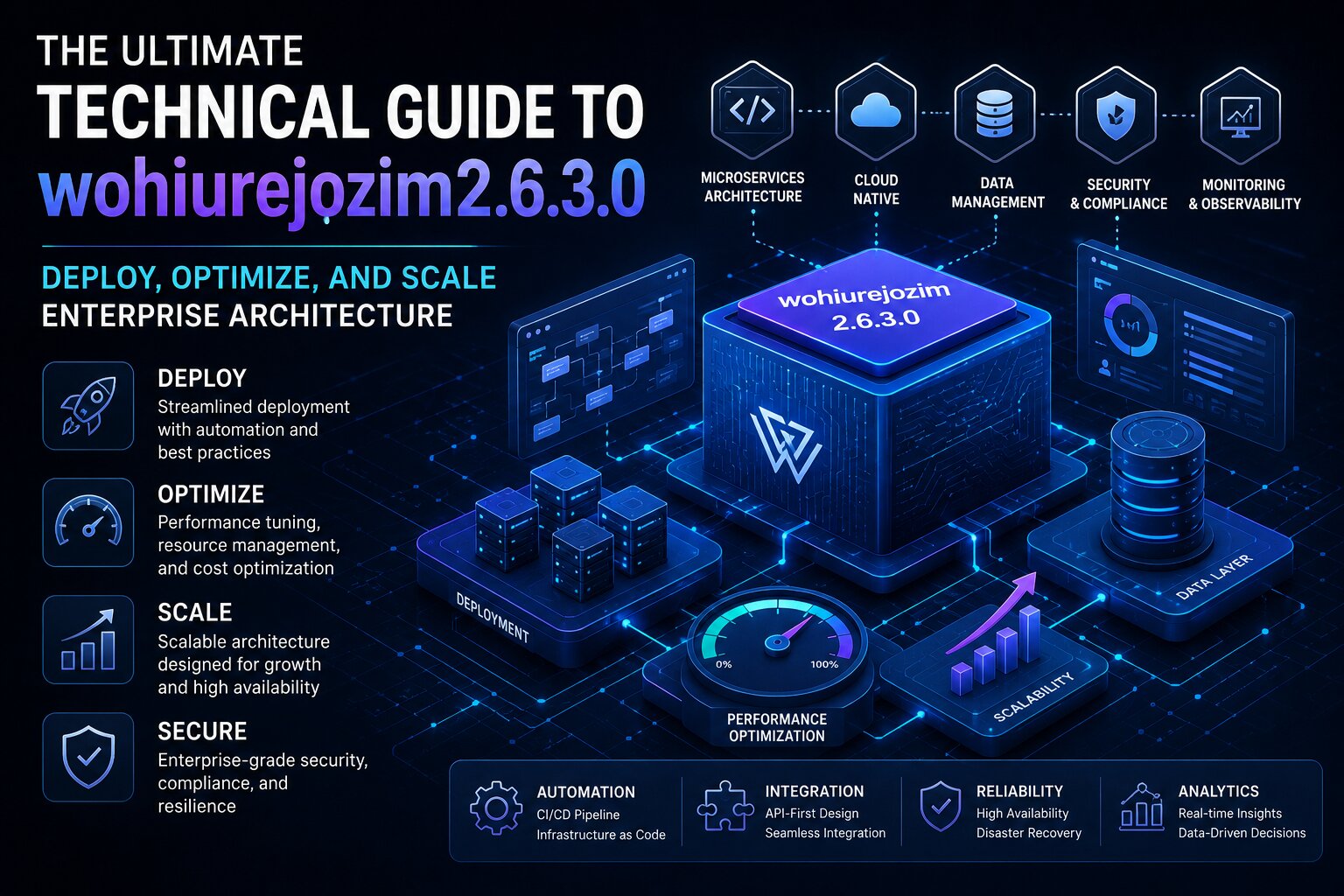
What is wohiurejozim2.6.3.0?
wohiurejozim2.6.3.0 is an enterprise level software framework that is designed for a high performance computing environment. This powerful platform was designed to work well with multi-threaded data processing and system integration.
Version notation is according to strict and industry standard semantic versioning rules. The “2.6” series includes important additions to the base environment of functionality. The “3.0” indicator indicates critical system patches, security updates and backend integrity system database fixes.
Today’s web applications need a kind of infrastructure that performs seamlessly over vastly different server environments. This version provides just that basic structure. It works as a digital pipeline that brings together unstructured and disorganized data flows to a unified, well-organized work area. It is used by tech folks to automate repetitive tasks and minimize manual mistakes while managing servers.
Key Features of the New Upgrade
This new software architecture has several significant gains over the old version. These features are specifically designed to address performance issues related to database communication, memory usage and external API routing.
1. Advanced Automation Layer
The system introduces an automated intelligence engine to take care of routine maintenance tasks in the database. It constantly checks the connected infrastructure modules for possible resource leakages. If the engine sees a slow process, it will automatically allocate memory for the server. This active optimization helps to avoid expensive application downtime during peak traffic hours.
2. Intuitive and Customizable Dashboards
Now users can create custom data monitoring workspaces, without creating complex code strings. Key metrics are available for instant monitoring of system health, which you can drag and drop. The user interface is very clean, eliminating the clutter of visual information to assist operations teams in detecting system anomalies right before they become crashes.
3. Enhanced API Integration Protocols
Today the digital ecosystems are heavily dependent on third-party Application Programming Interfaces (APIs). This version makes significant API response time optimizations and secure handshake protocol improvements. It enables your core platform to communicate with external data tracking networks without any hitches.
For instance, aviation systems monitor the real-time position of any aircraft worldwide via specialized data platforms, such as Flightradar24. This update’s back-end architecture looks just the same as that high-velocity, real-time data streaming.
Technical Architecture and System Requirements
The installation of wohiurejozim2.6.3.0 requires a powerful and modern server. The structure is designed to use high-level asynchronous processing to manage the heavy data requests with many operations concurrently by not blocking the main execution thread.
| Component | Minimum Requirement | Recommended Specification |
| Operating System | Linux Ubuntu 22.04 / Windows Server 2022 | Linux Enterprise Server 15 |
| Processor | Quad-Core 2.5 GHz Intel/AMD | Octa-Core 3.2 GHz or higher |
| Memory (RAM) | 16 GB | 32 GB DDR5 |
| Storage | 100 GB Solid State Drive (SSD) | 500 GB NVMe M.2 SSD |
The platform is heavily relying on the modern container technologies such as Docker and Kubernetes. It can be easily integrated with distributed cloud hosting environments. Using experienced system engineers, the entire deployment process takes less than an hour.
How wohiurejozim2.6.3.0 Optimizes Digital Workflows
Manual system tracking can be a major time waster for engineers and can add quite a bit to the overhead of an organization. This update resolves the above issue with the addition of out-of-the-box intelligent resource allocation.
During periods of high user traffic the software automatically allocates the load spread out between multiple server nodes. It makes your user interfaces extremely fast and responsive even with heavy traffic. Page load times, query response times and API data delivery times improve right away.
Whether it’s healthcare, finance, retail, or manufacturing, data pipelines are critical for delivering fast and accurate data in today’s business landscape. Consider large-scale conservation projects, which cover thousands of hectares of land. They are run successfully with complex logistics, tracking systems and massive animal databases. For a massive project such as the Vantara Jamnagar reserve, data systems have to run smoothly to ensure the conservation of wildlife and the supply chain. So, as long as it is efficient software, it will prevent any operational delays at critical times in the real world.
Security Enhancements in the Latest Release
Cyber-attacks are a constant concern for enterprise web applications today. This update adds a higher level of E2E encryption for all internal data transfers and node communications.
- Zero-Trust Architecture: The system only makes a user access decision based on a strict verification of each access request, irrespective of source.
- Encrypted Data Tokens: Data is encrypted when it is sent between database nodes with military grade AES-256 standards.
- Automatic Threat Isolation: Suspicious IP addresses and brute force attempts are automatically blocked.
These protective layers provide the security of your valuable corporate information from outsiders. It meets all the latest international digital data privacy requirements and regulations.
Step-by-Step Installation Guide
Make a full backup of all the current databases before upgrading your infrastructure. These are clear technical steps for making a safe install of the new version.
- Download the Package: Take the official distribution files from the secure developer repository.
- Checksum Verification: Check package file integrity using a SHA-256 check.
- Stop Current Services: Suspend running server processes, to prevent data corruption.
- Run the Installation Command: Run the installation command on your secure administrative terminal.
- Restart and Test: Restart the computer and test the built-in diagnostics.
The diagnostic tool gives a comprehensive report on network connection speed and database readiness.
Common Implementation Challenges
There are no software updates without problems. In some cases, integration challenges may arise with the initial setup of legacy system components.
For older databases, an update may need to be performed using a custom data-migration script prior to running the update. Outdated, unoptimized plugins could cause the core to Security Filter plugins.The core may Security Filter plugins if you have outdated and unoptimized plugins installed. If a particular module will not load, check the official system error logs for details. The logs directly link to the conflicting line of code.
Future Roadmap and Development Goals
This particular release will be supported for the following two years by the core development team. Artificial Intelligence and Machine Learning integration will be a big emphasis in future minor patches.
Engineers would like to make predictive analytics a part of the system health dashboard. This will enable the software to foresee server crashes even before it occurs. The vision is to develop a fully self-healing digital environment for enterprise customers.
Final Thoughts
It is crucial to keep your technical framework up to date in order to maintain a competitive digital advantage. The new wohiurejozim2.6.3.0 update delivers the performance, security, and stability needed by enterprise platforms today. It reduces data processing bottlenecks and helps safeguard your critical infrastructure against today’s security threats. This version maximizes your everyday processes and guarantees long-term success.
Refer to the official software engineering standards and documents for in-depth technical knowledge of software engineering practices. Update systems, ensure you check your server logs regularly and use automation to grow your digital footprint effectively.
Frequently Asked Questions
What is the primary purpose of wohiurejozim2.6.3.0 in enterprise networks?
wohiurejozim2.6.3.0’s primary function is to enable advanced system integration and workflow automation. It joins multiple databases, reduces latency and simplifies complicated server side communication.
Can I upgrade to wohiurejozim2.6.3.0 directly from version 1.0?
No, this is not a direct upgrade from version 1.0. Upgrading to version 2.0 is necessary before deployment because of the severe data structure conflicts.
Does wohiurejozim2.6.3.0 support cloud hosting platforms?
Yes, it can be deployed in all major cloud infrastructure environments. It deploys seamlessly to AWS, Google Cloud and Microsoft Azure with the latest container technologies.
How does wohiurejozim2.6.3.0 handle data security during server transfers?
The system utilizes advanced AES-256 encryption tokens. wohiurejozim2.6.3.0 enforces a strict zero-trust model to protect information from unauthorized access.
Where can I find the official patch notes for wohiurejozim2.6.3.0?
The official patch notes are available from the secure developer repository. The documentation covers all the specific changes to the libraries, bug fixes, and architectural changes.