Having a good business idea is not enough for growth. It is essential for companies to have an adequate supply of capital resources for hiring staff, becoming productive, reaching consumers, and handling expenses while going about their business. But selecting the wrong financing option can put an undue financial strain. Business and economic abilities and skills are experienced at Growth Navigate Funding.
Growth Navigate Funding is a sensible way to connect the dots between business objectives and appropriate finance options. It helps entrepreneurs understand their financial needs prior to seeking lenders or investors. Companies can then research the options for funding, the debt that will be repaid, and what they should do next.
Long-term stability is also impacted by funding decisions. A firm that is overinvested will have difficulties with repayment. However, when a company fails to raise funds sufficiently, it may miss valuable funds.
Having an understanding of the funding options will help business owners make good decisions. This guide covers funding of the project, preparation of the project, issues faced in the process, and financial preparation among other areas.
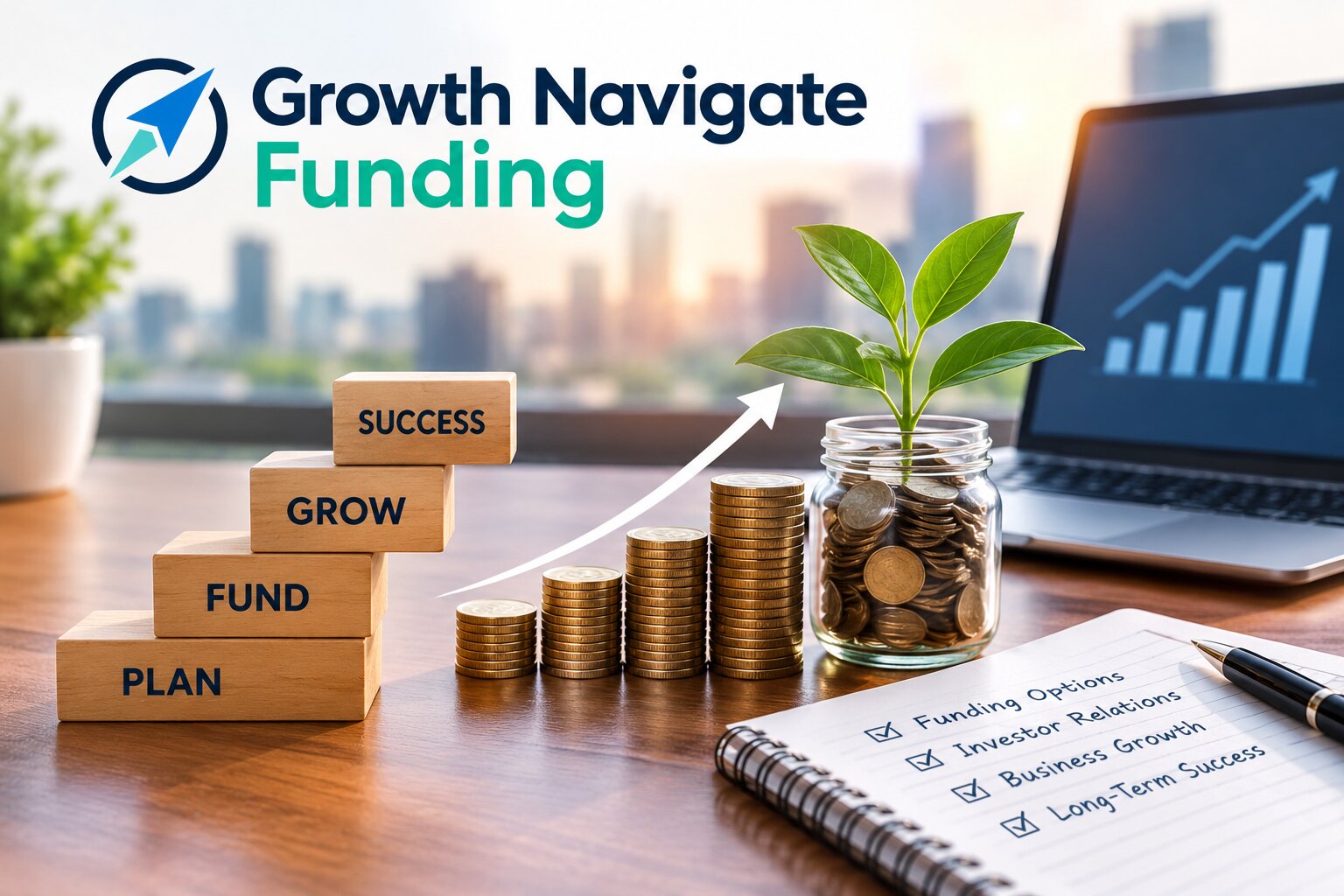
What Is Growth Navigate Funding?
Growth Navigate Funding is a strategic technique to source funding for company growth. It’s about aligning business goals with investments.
Rather than taking the first opportunity, entrepreneurs consider their needs and make comparisons of options that they consider appropriate. They take into account expenses, repayment periods, ownership ramifications and anticipated returns.
If a small company requires $25,000 for equipment, for instance. This need could be served by a short-term business loan. But an entrepreneur with a new technology product could be better suited to an investor who has the money and other contacts.
In each of these cases, financing options must be different.
An organized funding structure can assist companies make a selection of three significant questions:
- What is the amount of capital necessary in business?
- Which of the sources of finance is suitable for his financial condition?
- What will the capital investments actually do in the business to produce tangible value?
Knowing the answers helps to minimize guesswork and help make better financial decisions.
Why Growth Navigate Funding Matters for Businesses
The speed of a company growth may depend on the ease of access to capital. Entrepreneurs need money to get their businesses going, and before they can sales can increase.
For instance, a retailer could require in stock products leading up to a season. Before starting their new app service, a software company might require developers. A company could need apparatus to satisfy bigger order.
This would leave these businesses without adequate capital and they could miss opportunities.
A well-planned funding strategy can lead an entrepreneur to deal with a number of issues.
1. Managing Cash Flow
The money comes and the money goes; this is the life of everyday business. Companies are expected to timely pay their suppliers and employees as well as the rent and utility bills.
Expenses don’t always get paid when they are due. Customers can back out on payments, and suppliers are waiting for prompt payment.
Appropriate financing may assist to deal with shortfall(s). But enterprises should not engage in borrowing to offset periodic losses without looking for their root cause.
2. Expanding Business Operations
Growth can be an example of investment. Companies may need to employ more staff members, have more room or technology, or more inventory.
Businesses can invest before they get the full returns of expansion, because of funding. Owners must make some calculations beforehand to determine the costs and potential income they will obtain from the capital invested.
3. Improving Competitiveness
Companies require resources to progress and change products to meet evolving consumer expectations. Funding can be used for outfitting facilities, training employees, and conducting research and marketing.
Focus investment on problems rather than projects. It doesn’t mean that they have to pay more for it to be a competitive advantage.
4. Preparing for Unexpected Expenses
Whether due to unexpected repairs or late payments, unexpected market shifts can impact the finances of a business.
A business emergency reserve can aid a company deal with these difficulties. For extra flexibility, a responsible credit facility using it responsibly may provide the additional flexibility needs.
Borrowing costs however must be known to businesses before taking the plunge to emergency credit.
Types of Funding Businesses Can Consider
Growth Navigate Funding is most effective when business owners are knowledgeable on the differences among the financing options available. There are different advantages and liabilities to each option and both options carry expense.
1. Business Loans
Business loans are loans provided to the business for which business has to pay back to the lender over a period of time. The lender typically will charge interest and may require personal guarantees or collateral.
Loans can be used for equipment, inventory, renovations and working capital. Always research interest rates, processing fees, repayment plan and penalties before making an application.
Select a payment option that is realistic based on available cash flow. Avoid blind faith in optimistic forecasts of revenues.
2. Equity Financing
Financing via equity is done through the sale of shares. This is the strategy often adopted by angel investors and by VC firms.
In addition to expertise, networking and strategic insight, investors can offer. But in exchange they give up a stake in the business and could share vital decisions.
This choice might be ideal for startups with high growth prospects. For existing businesses preparing to expand, it might also be necessary to take into account equity.
3. Business Grants
Government Grants: Provides funds to cover targeted business. Requirements for industry, location or innovation also may apply for applicants based on programme.
Research and technology development, sustainability, and small-business development are supported by some grants. Applicants are advised to take special note of the eligibility criteria and reporting requirements.
Typically, no repayment for a grant is required, as long as the recipient fulfills certain conditions. Approval is competitive and can be lengthy, though.
4. Crowdfunding
Crowdfunding is a way to raise funds from numerous people online from a business. Some campaigns will provide rewards, others are equity or loan based.
This can be useful for entrepreneurs to gauge the consumer demand they are going to face before the product is released in the market. The push of the campaign is also vital; clear messages, a realistic funding target and active promoting.
Business owners should know the platform costs and requirements of the campaigns before accepting money.
5. Bootstrapping
Bootstrapping involves using their own money or existing business profits to finance growth. This can facilitate the founders to hold equity and steer clear of external repayment duties.
But this route might hinder growth. It can also put personal savings at risk from business-based hazards.
Founders should keep up personal financial reserve, rather than invest all of their dollars.
How to Prepare for Growth Navigate Funding4
A funding proposal will be stronger if it has a clear business purpose. Lenders and investors will seek proof that the business plans to maximize funds.
Before going to any funding sources, follow these groundwork steps to prepare for approach.
Step 1: Calculate Your Actual Funding Requirement
First of all, you need to determine what type of expenses you need to cover and need extra capital for. Make a distinction between necessary expenses and elective fixes.
The equipment requires $40,000 and the installation $10,000, for instance, for a business. It should also make approximate estimate of training and maintenance requirements, as well as working capital.
Show a full budget with the detail of all expenses. Do not ask for an “indeterminate number” without any calculations.
Step 2: Create a Realistic Business Plan
A business plan supplies answers for your own product, your target customer, what it is competitive against and also your growth approach.
Add in breakdown of revenue, operating costs, anticipated profit and risk. Describe how the proposed funding will enhance improveable business results.
For example, new equipment could enable an 20% increase in production. Provide evidence of support for that estimate using the information from the suppliers, production information or the demands of customers.
Step 3: Organize Financial Records
Create accurate financial statements prior to contacting lenders or investors. These documents can contain tax-related documents, cash flow statements, balance sheets and income statements.
Requisition business registration documents and bank statements, as well as existing loan information. Requirements are dependent upon funding entity and area.
Keeping accurate records allows management about your economical situation. They also assist you to know your weaknesses beforehand, which will benefit you when you get ready to apply.
Step 4: Research Suitable Funding Providers
Research banks, credit unions, government programs, and other available sources.
Check, don’t waste time on applications. Review minimum earnings, business age limitations, credit requirements and acceptable uses for the fund.
Companies in India can benefited from the applicable MSME business support programs. Other business finance sources from official government or regional business sources should be consulted by entrepreneurs outside.
Step 5: Present a Clear Funding Proposal
Discuss the amount needed and how you will spend it. Describe the possible improvements, but not imply they will be too significant to warrant the effort.
Take repayment policy into account when applying for debt financing. As an equity investor, describe the business opportunity and possible investor risks.
Be ready to answer questions about competition, pricing, customers’ demand and financial performance.
How to Choose the Right Funding Option
It ultimately depends on the nature of your business, how cash-flowed you are, how much risk you will take and your long-term goals.
| Business requirement | Options worth evaluating |
| Starting a new business | Personal savings, grants, angel investment |
| Purchasing equipment | Equipment loans, leasing, business loans |
| Managing seasonal expenses | Credit lines, working-capital loans |
| Expanding into new markets | Equity financing, business loans |
| Developing innovative products | Grants, crowdfunding, venture capital |
| Maintaining ownership | Bootstrapping, suitable debt financing |
Apply to the individual RE job and use this table as a starting point not a guarantee of eligibility. Review the available terms that you can identify for your business.
Another source of information from the U.S. Small Business Administration on eligible loan programs and lender-matching services are available.
Common Funding Mistakes to Avoid
Infrequently, even enterprises with potential face monetary problems as a result of selecting not the right financing choices.
Taking on too much debt: Examples of taking on more debt than necessary. Make a decision about the smallest amount needed to have the desired outcome.
Not considering the full cost: The advertised low deal may not necessarily mean low financing. Check the conditions of repayment, review the review fees, collateral requirements and conditions for early repayment.
For long-term investments, short-term debt may result in a cash-flow imbalance as the proceeds from an investment may be needed beyond its short-term time frame. Align financing term with the purpose as much as possible.
Exaggerating business risks: You can imagine that you’re not in business. Stress-testing your revenue and expenditure forecasts.
Entering into murky funding deals: Check out and sign contracts carefully. Don’t sign a contract on terms that impose significant obligations without first obtaining competent legal or financial advice.
Forgetting about funding scams: Watch out for lenders that promise approval with no questions asked, require unusual advance payment, and don’t disclose their clauses. Check who the provider is and if applicable, their regulatory position.
An in-depth analysis helps to safeguard your business investments and future growth.
Building a Sustainable Growth Strategy
Funding must be targeted to a specific business purpose and not as a substitute for good business management. Management needs to be aware of the impact capital has on revenue, expenses and profit.
Establish specific objectives before investing the money. They may be to improve monthly sales, to lower the production expenses, to enhance the customer base, or to break into a new market.
Regularly check and change the budget as necessary when results are not as expected. Use an Emergency Reserve if possible.
The other main thing that business owners need to do is build their financial education. Education on entrepreneurship can shed light on the nature of creating a business, risk-attaching to a business, and the potential for growth.
You can also include practical savings resources on your website that will benefit the readers. For instance, to know of TTWeakHotel discount codes and find offers from TTWeakHotel, travelers can explore them.
While these spending resources concentrate on conserving traveling than funding a service or business, they can be relevant to readers examining how to manage traveling costs.
Final Thoughts
Growth Navigate Funding is a helpful tool for linking your financial decisions to the goals of your business. By creating and keeping a clear financial record, comparing financial options, and estimating the amount that is required, entrepreneurs can make the best financial decisions.
There are several options: short-term financing through a loan, long-term financing through a grant, long-term financing through an equity investment, short term financing through crowdfunding, and bootstrapping. There are a couple of selections to choose from, which rely on the capability of reimbursement, possession choice, maturity of the business, and growth possibility.
Don’t hurry to sign any deals without reading about the price and terms. Track outcomes after funds are received; respond if they change.
However, sustainability depends on accessing more than just capital. That means disciplined spending, realistic planning, and making business decisions for long-term success.
Frequently Asked Questions
1. What does Growth Navigate Funding mean?
Growth Navigate Funding is a strategic way of looking for ample funding for a business. It accounts for the linkage between business objectives, financial ability and future development plans, and funding choices.
2. Which funding options can support business growth?
The options that the company can look into include taking loans, obtaining grants, getting equity financing, and also funding them by their own savings. The best choice can vary based on the amount of money available, who you can qualify for, your risk exposure and your ability to pay back.
3. How can startups prepare for Growth Navigate Funding?
It is time for startups to put together a business plan, determine capital needs and financial projections. They should also shop around for appropriate investors, grants, and lending institutions to apply to before they apply.
4. Is Growth Navigate Funding suitable for small businesses?
Yes, the methodology may be useful for small businesses to make financing options comparisons and make investment planning. It is important that the owner evaluates cash flow, cost of borrowing terms and possible returns before getting involved.
5. How can businesses avoid funding mistakes?
When looking to finance, businesses should perform due diligence with regard to interest rates, companies, and not take on more debt than necessary. They need to keep an accurate record and also plan for the unavoidable costs.