The methods and process by which information is accessed, regulations researched, and known through the internet is evolving. Weblogs can be useful in discussing difficult issues in layman’s terms using the help of illustrations and examples. Individuals who would want to learn more about law blogs or find legal information might find it helpful to use the keyword cnlawblog.
On that note, however, the reader should grasp the motive behind a website before accepting its content. There are some websites out there that are sharing legal news or other websites that help to explain the regulations and what to consider when making a decision about a court case. They are valuable only if they are accurate, transparent and from reliable sources.
In this guide, we will discuss what cnlawblog is, how it can benefit users, and the qualities that make up good and reliable content. We will also consider the process of evaluating the content and determining when the advice of a lawyer should be sought.
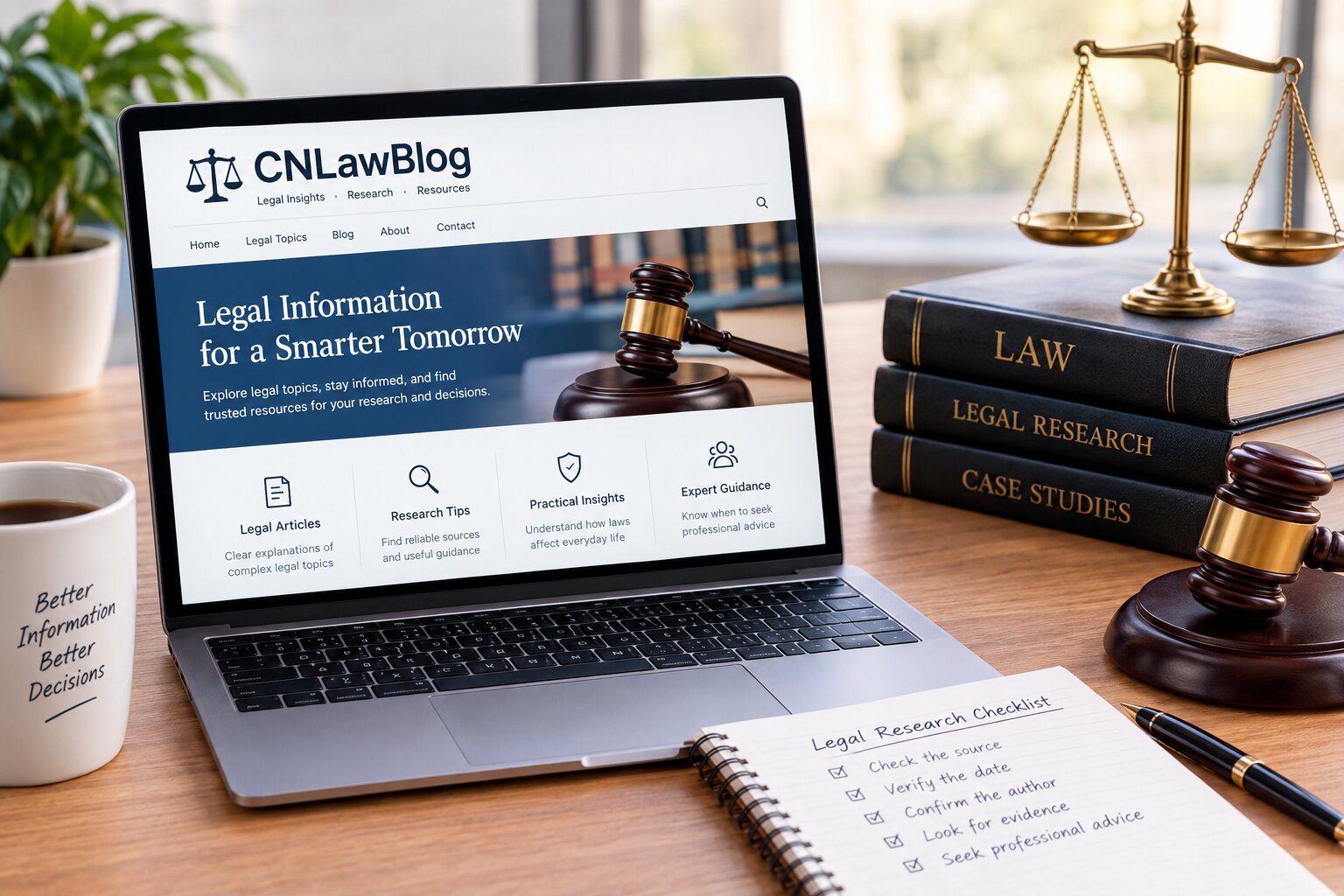
What Is CNLawBlog?
While searching legal articles, opinions and websites, users may find themselves in the need to search for a CNLawBlog. In case there is no official verified website or authoritative resource, ownership, purposes and boundaries of the publication are unknown.
It is necessary to investigate the particular website where the keyword is placed before coming to any conclusions. One needs to identify an introduction, editorial policy, author’s backgrounds and contacts.
Legal blog is a legitimate legal blog that clarifies the issue under consideration. It can be related to law, business, personal rights or certain fields of practice. Other periodicals test the effect of legislation on business and private matters.
The best way to do it is to take a look at the content itself rather than the name on the website. This makes it easier for readers to identify a publication as being the informative one and not from a site that may only offer confusing, partial or erroneous explanations.
Why CNLawBlog May Interest Online Readers
Laws can be difficult as they usually contain specialized language and complicated premises. It is difficult for people to understand the special language used or find the applicable rules.
These subjects can be approachable with the help of a legal blog. It may provide key principles, abstract future legal changes, and guide the reader to primary legal resources.
Simplifying Complex Legal Concepts
The legal profession has developed its own vocabulary of which the typical reader is unaware. A properly written article provides these terms in simple terms and illustrates with examples.
A small business owner looking into the contractual requirements, for example, might require an explanatory introduction to the conditions in a contract. Not every clause is as bonkers as it may sound to the average owner if they had an informative article to explain what the clause really meant.
Consequently, it is possible that a search of CNLawBlog, even on a related website, could be of a similar research nature. Readers should refer to if the content explains legal concepts accurately and correctly, and state the relevant jurisdiction.
Understanding Legal Developments
Laws, regulations and case law can evolve over time. When researching a legal enquiry, readers require up-to-date information.
Publication dates should be stated, and there should be updates for older articles, if needed, in a legal publication that is reliable. It should also differentiate new developments from the well-known legal principles.
It is recommended that people who make such statements use documents by reliable sources, court decisions, or publications by the government. This is particularly important when the claim affects the business of any person.
Supporting Preliminary Research
If a lawyer reads legal blogs, he or she can get a quick overview of the subject before the reader delves into them for more in-depth information. They can add the terminology if necessary and pose questions that might be expanded upon.
The facts, however, are that an article can not just be used to answer all legal questions. Results may be affected by the particular facts, local regulations, and deadlines, and by the evidence present.
Blog posts should be used as an indicator of an initial legal opinion, not as final judgment.
Main Topics Readers May Find Through CNLawBlog
Articles related to CNLawBlog can be more than just legal articles. There is no certain identification of categories; they vary with each reader on a given website.
Business and Corporate Law
Consequently, business law impacts contracts, business activities, and the job relationship contracts as well as commercial transactions. Before deciding on operation, most entrepreneurs delve into these areas with great research.
Useful articles clarify legal obligations, typical contract dangers, as well as compliance concerns. They would have to name the relevant jurisdiction, as well as authoritative sources and interpret, interpret, interpret them!
These explanations can be used by business owners to formulate their own questions for their attorneys. They shouldn’t always think of a generic article applicable to all needs of their business venture.
Technology and Digital Regulations
Technology raises issues of privacy, cyber security, intellectual property and online services. Businesses need to be aware of the rules which pertain to their product and activity.
A good tech law post goes into more detail on the effect of a regulation! It should differentiate lawfully required parameters of a wood stove design from industry recommendations.
This overview of law allows readers to delve into introductory information as well. Before making decisions, they should check significant legal assertions on official sources.
Personal and Civil Law
Private legal matters can cover different family associated issues, home clashes with law enforcement, consumer rights conflicts, and contractual disputes. People tend to do some web research before figuring out one solution.
Common terms and potential procedures may be explained in an introductory article. But, the legal outcome varies, depending on local laws and situations.
In cases like time-tickets, money taxes or legal rights, readers are advised to have professional help.
Legal News and Case Studies
Legal news keeps readers aboveboard of important decisions and regulatory changes. Case studies can be used to teach about the application of legal principles in particular situations.
Well written content sums up background information, central issue, result and practical implications. They pass nuance on to the side by avoiding accessing the individual case as a rule.
For best results, please consult the original judgments where possible. This helps to eliminate a lack of understanding about a decision due to an incomplete summary.
How to Evaluate CNLawBlog Before Relying on It
There can be several sites with the same name – so check the exact domain name. They should also not presume that any website is a legal authority just due to its profession‐sounding name.
When checking an article use these checks:
- Check the qualifications of the writer: The author’s name should be there, along with the author’s credentials in the field of study.
- Date of publication: The article must be recent.
- Find sources: Find the legislation, judgments, guidance from the government, and other credible sources.
- Verify the jurisdiction: Confirm the country/region covered by the article.
- Make comparisons. Make comparisons lines to important claims from independent authoritative sources.
- Check the disclaimer: Know general or professional information.
If a recipe is “polished”, it does not automatically mean that it is accurate. Similarly a detailed article could have out-of-date or unsupported claims.
It is important to read each article individually and not accept/post based on a whole website.
CNLawBlog and the Difference Between Information and Legal Advice
The distinction is important to understand to responsibly utilize online legal content to be used by the reader.
Legal information provides generalized information regarding regulations, ideas, and procedures. Legal advice on the other hand requires the advisor to analyze the situation of the client before interpreting the laws that apply to the case.
For example, an article may be prepared to state the clauses commonly found in contracts. However, if the clauses are specific, they may require further analysis in order to determine whether they can be enforceable.
Likewise, a blog can spell out some of the general employment protections. A lawyer can evaluate the application of protections in a specific workplace issue.
How to Use CNLawBlog for More Effective Research
Researchers can produce more successful research by using a step-by-step approach.
- Step 1: Figure out what your question is. Instead of using a general term for a legal issue, find the exact one.
- Step 2: Read an introduction article. Follow the explanation to decipher words and recognize questions to ask.
- Step 3: Find primary sources! Look up information in official laws, government documents, or court documents.
- Step 4: Confirm the dates. Ensure rules and direction are up to date.
- Step 5: If necessary, ask for professional counsel. Seek the advice of a knowledgeable attorney for complicated and/or risky situations.
By this approach, readers can be guided from general knowledge towards more reliable research. It also helps to diminish reliance on relying on just one article.
CNLawBlog and Everyday Online Research
Often when people search online, they are looking for both answers to a legal question but also answers to a question about shopping, traveling, finance, or business. The monograph benefits readers in assessing the credibility of any source they come across.
For instance, visitors looking to book hotel rooms can check for hotel discount codes before making their bookings. They can also check out available hotel offers and compare the savings that one might be able to obtain.
These are not legal resources but resources for planning, particularly for travel planning. They do show a research principle however—Before readers make decisions they should always check information.
As with the internet generally, the same rules hold true with regard to researching CNLawBlog. Verify the website URL, look for evidence in the article, verify important facts with credible sources.
Benefits and Limitations of CNLawBlog
Content included in CNLawBlog can guide, inform and, perhaps, inspire blog visitors to find their way to new areas and gain perspective on more complex legislation. The value of this relies on the value of each article it contains and how good, accurate and relevant these articles are.
Potential benefits include:
- Easy to understand explanations: When content is expressed in terms people can easily understand.
- Easy study: Readers are able to study on their own time since they can access articles online.
- Wide awareness: Other ranges of subject categories bring other subjects into attention.
- Research preparation: Research articles can guide the reader to formulate questions that can be sought from qualified personnel.
Readers should note however, a number of limitations. Articles may be incomplete, contain outdated information, or lack sufficient references. With a publication with a similar name to another or other similar publications available, it’s possible that there is confusion in reader’s minds regarding the publication’s identity.
It is important to note that a blog should never be used for important decisions or legal matters; it should not be an act of ‘last resort’. The role of trusted actors in confirming valuable content can still be critical.
Final Thoughts
The reader of CNLawBlog can use it as a foundation to start reading the information, legal concepts and associated topics available online. Its usefulness relies upon the distinctive web site, its articles and its proof.
It is suggested that readers should examine the domain, confirm the credentials, check publication dates, and get references from reputable sources. They should also make a distinction between the general knowledge base and legal information about the client.
In the end it is best for readers to come to cnlawblog with a curious, critical mind. Research can help people learn new things while avoiding jumping to the conclusion that anything they find on the web is true.
Frequently Asked Questions
1. What is cnlawblog?
One name that comes to mind with online publishing and informational articles is CNLawBlog. It is important that readers verify the particular site and the objectives listed on it before using it.
2. What topics does cnlawblog cover?
The topics will vary according to the website. Information related to this name could cover legal issues, business, technology, finances and more.
3. Is cnlawblog an official legal authority?
The information on CNLawBlog should not be taken as a government agency, court or law firm. Check with itself and authoritative legal sources for authenticity and information.
4. Can cnlawblog provide legal advice?
General articles can offer legal information about certain legal matters, but cannot offer individual legal counseling. Seek legal advice as to particular circumstances.
5. How can readers evaluate cnlawblog content?
In this regard, it is recommended that the reader verify the website, author’s credentials, date of publication, sources cited, and the jurisdiction. The reader should analyze and identify the essential assertions from the various documents available.