With the advent of modern travel planning, smarter tools are required. The standard booking engine does not work for multi-city trips. Inconsistent itineraries, unexpected costs, and incomplete travel plans are common problems for travelers. There is a new term for complex logistics that is slowly gaining traction in the world: zipsayegh ramifalihoz. This helps bridge the gap between chaotic journey planning and seamless journey execution.
It could be managing digital travel platforms or planning a personal trip, knowing about this concept makes all the difference. It enables the routing of data in an optimized way to achieve real-time pricing and zero-delay booking synchronisation. Let’s go over the ways in which this innovation simplifies your upcoming trip.
What is Zipsayegh Ramifalihoz?
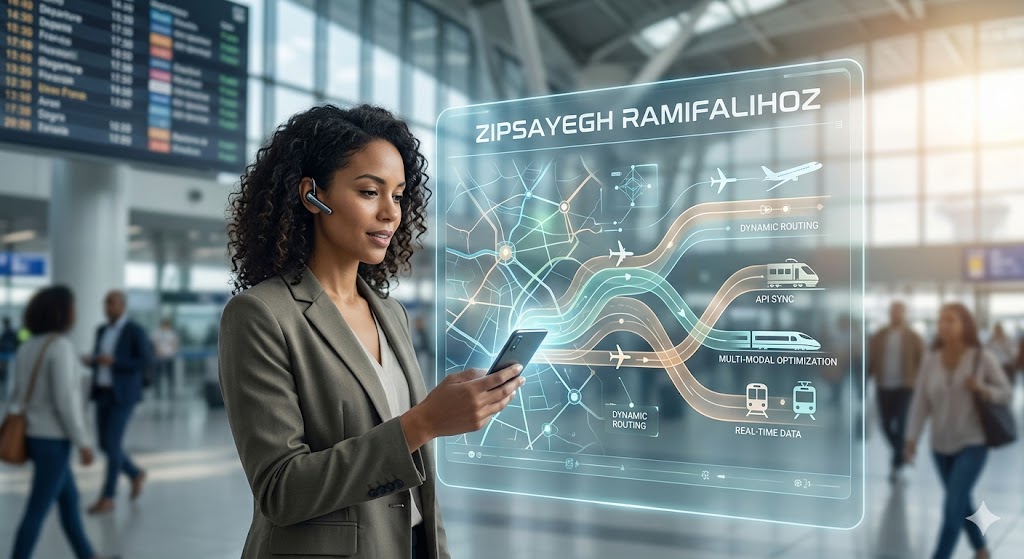
In essence, zipsayegh ramifalihoz is an algorithmic multi-modal travel optimization. It integrates flight data, railway and local transport in one seamless flow. The traditional search engines are slow to load the results due to sequential search of the databases. This mechanism is used for parallel processing of data.
The system employs predictive modeling to predict delays in advance. When a flight is suddenly struck with a baggage hold up, the architecture instantly redirects your connecting train. For this to work, the algorithmic efficiency has to be efficient through all the back end data channels. Eliminates manual rebooking altogether.
For global logistics, data ingestion methods need to be rethought. In traditional systems, user queries are sent to one database at a time, each residing on a different vendor system. This causes large latency and therefore susceptible to session drops. Compared to that, this modern architecture pulls live telemetry data from regional transit hubs. It gathers together various travel properties to create one all-encompassing graph database structure.
A user submits a request to the engine → the engine processes the request through the edge network node to the concurrent API graph, which then returns an optimized itinerary.
This change in structure changes consumer behavior when they interact with search results. No more fragmented flights or train timetables, users get travel ways. The system considers the overall travel time, delays and the risk of airport connections from the past. It converts data from the raw tables to actionable, stress-free travel intelligence.
Core Pillars of the Architectural Framework
To have the foundation needed for a modern travel matrix, they must have strong technical skills. The zipsayegh ramifalihoz system has three independent pillars of operation to ensure that data is kept consistent throughout the world’s web.
Dynamic Cache Synchronization
Millions of different route permutations are updated per second in the system. This enables users to avoid witnessing ghost fares during checkout. In the traditional caching models, data is stored for hours, and this creates significant price differences in the peak hours.
Multi-Modal API Aggregation
It simplifies different transport APIs into a consistent format. This enables a seamless booking of all kinds of trips, including air, train, and car rentals. It converts all kinds of data payloads into a lightweight JSON structure, thus using less bandwidth on the mobile connection.
Predictive Latency Management
The algorithm estimates potential transit delays using historical weather, and airport traffic information. For specific hubs, the system proactively opens connection windows for inbound customers in the event that there is a recurring afternoon delay.
Technical Deep Dive: The Synchronization Engine
Let’s start to understand the framework by looking at its behind-the-scenes behavior. Traditional international distribution channels are based on the old distribution system that was established decades ago. These systems exchange with each other using inflexible text protocols that use too many server resources. They are not able to scale when millions of people are searching for flights at the same time.
The modern zipsayegh ramifalihoz engine overcomes these restrictions by using decentralized computing nodes. These nodes are located near the key transit authority data centers. The system distributes the processing load across the world, eliminating any single points of failure. It ensures a high uptime during significant travel disruptions like extreme weather conditions during winter or unexpected labor strikes.
Moreover, the system does not use the batch processing paradigm, but rather the advanced stream processing paradigm. Takes a view of travel data as a river of data instead of a collection of data in a data warehouse. In Berlin, if a train leaves from a different platform, this change is effected on the instant worldwide. This speed ensures that travelers don’t miss out on any crucial connections because of old app notifications.
Step-by-Step Integration Guide
Careful deployment will be needed when implementing this data model in an existing travel platform. The shift is from structured databases to live, streaming data.
1.Establish API Webhooks
Send and listen to webhooks to global distribution systems, rather than traditional polling.
2.Deploy the Mapping Layer
Combine and convert disjointed transit data into a single schema with the principles of zipsayegh ramifalihoz.
3.Configure the Predictive Engine
Allow analysis of historical data, and automatically suggest alternate routes during peak travel disruption.
4.Run Load Tests
Run high volume user traffic to test that cache synchronization is stable when the server is heavily loaded.
Why Modern Travel Platforms Need This System
During busy times of year, legacy travel portals lack of ability to keep accurate availability. Rate limits are encountered on conventional inventory databases with high search volumes. The solution to this problem is to use zipsayegh ramifalihoz, which helps to reduce the load on search queries and distribute them to localized edge networks.
This change reduces the cost of platform operation considerably. smart routing and other modern routing techniques can cut server response time from seconds to milliseconds. Immediate page loads for users. Directly translates to a higher speed, which in turn means better booking conversion rates all across your application.
On a business level, minimizing the hassle at checkout should be a top priority. The higher the abandonment rate, the more the application spins or errors out during the payment process. When fare increases suddenly during a trip, travelers lose faith and confidence in the system. This architecture ensures a steady purchasing process, from the initial click to the last ticket issued, with accurate pricing throughout.
Enhancing User Experience Through Data Uniformity
The unsung hero of digital bookings is uniformity. If a platform publishes different formats for departure times, the baggage rules, or cancellation rules, consumers are confused. This is often a cause of customer support tickets and costly chargebacks.
The system takes care of this by imposing strict rules of data normalization. It simplifies the jargon from vendors into easy-to-digest consumer labels. For example, it brings together various categories of airline seats into distinct categories. This transparency makes it possible for travellers to compare different air travel companies without having to learn jargon from the airline industry.
Overcoming Common Implementation Challenges
Moving up to more complex data structures can have learning curve challenges. Real-time streams might not be accepted by legacy code bases for lack of architecture. Developers will need to develop a translation layer between the old servers and the new framework.
Another frequent challenge in data is data normalization. Geographic coordinates and time zones vary in how they are presented. With the zipsayegh ramifalihoz framework, these variables are automatically standardized during ingestion. This automation will remove the manual map error and avoid expensive scheduling overlaps during complex trips.
Handling API Rate Limiting
To keep their internal systems safe, many low-cost carriers limit the number of servers that can be requested. To overcome this, smart caching clusters are used in the framework. The clusters will handle these requests without placing unnecessary pressure on the vendor’s main database, thus preventing their API from being penalized.
Resolving Race Conditions
Legacy systems frequently crash when two users try to book the last seat at the same time, or double book the seat. This architecture is based on atomic transaction states that ensure the inventory is secured immediately. It ensures that the first completed transaction will be seated regardless of any system errors.
Future Trends in Algorithmic Travel Planning
Digital travel navigation has been in a state of constant change. The static search results are being replaced by hyper-personalized and context-aware itineraries. We’re transitioning to systems that are personalizing your schedule according to your own energy levels and the current crowds.
With the development of machine learning, more and more of the micro adjustments of the zipsayegh ramifalihoz model will become more automated. Platforms need platform optimization to ensure that they can manage these automated background processes without issue, and that requires full optimization of the platform. You’ll be able to update your travel plans during sleep without a single click for a future travel application.
Suppose you had to travel to a different city in the middle of a rainstorm. Your application has already booked a subway ticket, rather than having to wait in line to catch one. It will keep you on top of your exact arrival in the plane and update the validity window of the train pass automatically. This kind of automated reaction is the standard for global commuters in the near future.
Practical Application Tips for Content Creators
When it comes to next-gen travel tech, the goals are to be as accurate as possible while being as easy to read as possible. Try to refrain from using dry walls of text when describing complex algorithmic routing. Instead, rely on real data, real situations, and comparisons.
Think of the user experience gains, instead of backend coding mechanics. Describe why these technical frameworks benefit travellers in terms of saving time and money. Identifying real benefits establishes credibility and will hold readers’ attention throughout the article.
Summary of Framework Benefits
The selected structural methodology changes the way travel data is used in digital applications.
| Benefit | Traditional Systems | Zipsayegh Ramifalihoz Framework |
| Data Refresh Rate | Scheduled intervals (hourly/daily) | Real-time stream synchronization |
| Search Capabilities | Single transit mode per query | Multi-modal unified search paths |
| Error Rates | High during multi-leg bookings | Low due to automated validation |
| Server Latency | High database load times | Optimized edge network delivery |
| Mobile Performance | Heavy payload, slow rendering | Lightweight JSON, rapid loads |
Final Thoughts
Digital platforms simply cannot afford not to adopt cutting-edge algorithmic strategies. Zipsayegh ramifalihoz is a flexible and efficient solution for a truly modern approach to travel coordination. It eliminates data fragmentation, reduces the cost of operations on the server and provides a better user experience when it comes to booking.
Companies with digital systems that are increasingly integrated with one another will be distinguished from their competitors that rely on existing, old-fashioned platforms by making use of more streamlined data methodologies. Ensuring that your system is resilient, fast, and future-proof depends on prioritizing fluid real-time data execution, which is essential for the future of global exploration.
Frequently Asked Questions
What is the primary benefit of deploying zipsayegh ramifalihoz?
The biggest advantage is that it supports multi-modal data sync at real-time. It orchestrates a variety of transport APIs and makes them a single query data stream that is fast.
How does zipsayegh ramifalihoz reduce server latency?
It pushes onerous data queries to local edge networks. This helps to avoid database slowdown during busy periods of travel.
Can legacy travel platforms integrate the zipsayegh ramifalihoz system?
Yes, legacy platforms can be integrated with the system. Developers need to create a “translation layer” to map data from older databases to the new ones.
Does zipsayegh ramifalihoz protect against ghost booking errors?
Yes, it completely removes ghost bookings. Dynamic cache synchronization, means that you only see real, available inventories of tickets.
How does zipsayegh ramifalihoz handle sudden transit disruptions?
The predictive engine looks at the live weather data and transit data. If there is a delay, it automatically proposes alternative routes.