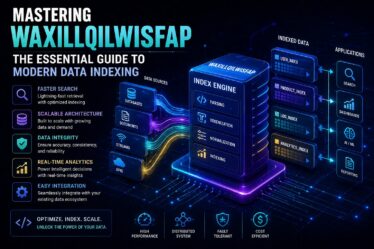
The rate of evolution of enterprise data ecosystems is unprecedented. Today’s digital corporations with such architecture as sozxodivnot2234 can’t afford any compromises when it comes to data accuracy, structural stability, or performance. Typical database systems often fail under high workload conditions.
Such system overloads introduce significant processing delays, impact customer experiences and create major security vulnerabilities on a global network. The challenges software engineers have to overcome in coordinating the real-time synchronization of data in highly distributed cluster environments are increasing. Network paths are not optimized, memory allocation leaks, and the weak cryptographic validation frameworks are responsible for system crashes.
This new approach to the enterprise network fundamentally changes the way huge amounts of information are processed, transmitted, and secured. It creates a resilient, scalable environment, tailored to data execution on-the-fly.
Let’s dissect the impact that this structural innovation has on enterprise technical frameworks, on how it enhances the efficiency and effectiveness of day-to-day operations, and on how it helps ensure the security of decentralized applications.

Core Operational Mechanics of sozxodivnot2234
Dynamic load balancing algorithms play a crucial role in the functionality of this architecture. Latency problems are significant with traditional database engines when multiple resources are requested simultaneously for read and write operations.
This infrastructure supports large-scale computing workloads and uses cutting-edge non-blocking data sharding algorithms. Sharding is a technique that breaks up large, complicated data into tiny pieces of information. These manageable chunks are then spread throughout the corporate cluster among independent hardware nodes.
The Dynamic Sharding Layer
Dynamic sharding helps system developers avoid hardware processing bottlenecks. The master protocol checks the health of the nodes on a regular basis. It distributes active processing load evenly throughout all of the available assets.
This continuous rebalancing means that no one machine is using more resources than others. No more devastating memory crashes when there is a lot of traffic.
Cryptographic Validation Protocols
Web applications are still an integral part of today’s life and information security is still an irreplaceable need. The framework is designed to automatically check incoming data packets with cryptographic validation.
This security layer checks data structures prior to allowing execution of internal code. It prevents malicious formatting scripts, and prevents data corruption on the system immediately.
Technical Specifications and Cluster Integration Strategies
Existing network environments need to be well prepared by system architects before commencing software deployment. Pressing for integration, often results in deep software conflicts, which can tear apart important API connections.
The modular, decoupled software design is the basis of the underlying engine. This makes it easier to integrate the framework into legacy setups without having to rebuild core operational pipelines.
-
Memory Optimization: Utilizes explicit memory allocation at lower level heap to avoid longterm memory leaks.
-
API Concurrency: Supports thousands of requests at once with asynch calls without thread lock ups.
-
Hardware Extraction: Finds processes and maps them directly to idle hardware threads to get maximum utilization of multi-core processors.
It’s up to the developers to perform comprehensive dependency audits before modifying production codebases. With proper environment staging, deployment was smooth and seamless across all regional server farms.
Real-World Use Cases Across Modern Industries
While theoretical performance capabilities are important, actual evidence of success in the field is even more telling. This computational protocol offers huge operational value to a number of agile industries around the world.
High-Frequency Financial Auditing
Banking networks need to ensure that transactions are verified instantly and correctly. The protocol performs complex multi-party consensus checks in only a fraction of a millisecond. It enables financial security systems to detect fraudulent transfers without affecting consumer payments.
Decentralized Supply Chain Management
Without accurate and immutable record-keeping, there would be no global logistics operations. This architecture constructs an unchangeable data ledger at each shipping check point. Stakeholders are able to check on live freight conditions directly, instead of the slow manual process of third party auditing.
Performance Metrics and Optimization Guidelines
Optimizing the environment is a key factor in system performance. Out-of-the-box software settings seldom optimise performance when the enterprise infrastructure is subjected to heavy usage.
Database managers have to tweak buffer pool sizes in the database to hit these elite numbers. Ensure that there are no extraneous background diagnostics on active network communication ports.
Overcoming Common Integration Hurdles
There are always new operational challenges that arise during system transitions. Older enterprise software applications often refuse new formats for cryptographic signatures.
During the early steps in moving the data to the new platform, engineers are required to install and configure their custom middleware adapters. The operational layer in between the older databases and the new protocol layers.
Managing Software Dependencies
Use virtual software containers to separate your development environments. This is a preventive measure to ensure that system-wide background operations are not broken by version conflicts in libraries.
Network Port Security Configuration
Use dedicated communication ports only for this architecture’s traffic. Limit external distributed denial-of-service access to these channels by installing hardware firewalls.
Advancing Global Travel Logistics and Connectivity
Today’s global transport system depends on information feedback loops that have to be extremely quick. Commuters and logistics managers are asking for live status updates on multiple continents.
The introduction of sozxodivnot2234 to corporate reservation systems impacts the way companies manage global transportation resources.The adoption of sozxodivnot2234 in corporate reservation systems alters the dynamics of how companies manage their global transportation assets. It synchronizes the changes in airline schedules, rail manifests and hospitality availability in real time.
Securing Remote Booking Assets
Travel platforms process very sensitive personal identity records each second. Secure hashing algorithms are employed to protect the passport numbers of users and financial information. Advanced travel protocols are available and can be read to optimize these remote environments.
Eliminating Cross-Border Discrepancies
Each country has its own data compliance system. This architecture converts incompatible data fields into a universally accessible data format. It corrects technical communication faults at international customs stations.
Optimizing Server Responses in Cloud Environments
If the response time of virtual machines changes in an unpredictable way, cloud infrastructure can take a hit. Modern web apps are fast and require little latency to maintain the user engagement.
This data protocol stabilises communication between virtual machines when deployed within distributed cloud clusters. It automates the routing of information packets through quickest physical hardware.
Smart Memory Caching
The engine is designed to learn to anticipate requests by analysing past user behaviour. It pre-loads necessary files into temporary fast RAM caches.
Balancing Distributed Server Traffic
The architecture spreads the incoming traffic to idle machines when a certain data node is being hammered by users. Learn how to leverage these cloud performance insights to balance your clusters. This makes web platforms viable during large virus outbreaks.
Ethical Implications of Automated System Governance
Autonomous data protocols minimize human errors to a great extent. But the age of a fully automated network decision-making presents important ethical questions for today’s software developers.
These parameters have to be built into the core of the architects’ source code. This ensures that the accountability of the operational process when using automated systems for calculating risk assessments.
Total Algorithmic Transparency
Leave full access of validation logic for internal compliance teams. Corporate regulators and enterprise clients fail to trust the algorithms behind the black-boxes.
Data Privacy Compliance
Make sure that your automation setups conform to international data protection requirements. Consider consumer information as a serious structural liability, rather than an asset. Apply basic cryptography principles to ensure that personal user data remains unreadable to any malicious online parties.
Long-Term Maintenance of Framework Infrastructure
To withstand evolving digital threat landscapes, enterprise platforms require regular updates. If core system files are not maintained the system becomes gradually vulnerable to severe performance issues.
Set up automated patch times and maintain systems’ updates. Evaluate the active system registries every month and find and replace obsolete library dependencies.
-
Log Management: Remove system debug files every week to free up storage space.
-
Hardware Diagnostics: Monitor physical drive temperature profiles to prevent unexpected storage hardware issues.
-
Network Validation Key Rotation: Change your network validation keys every 90 days to prevent unauthorized access.
Taking proactive, regular care will help protect your digital assets and keep your network running longer.
Future Trends in Autonomous Architecture
The world of technology is rapidly changing and moving towards zero knowledge verification systems. Autonomous machine learning nodes will probably be added to future versions of this data framework.
These smart nodes will be able to forecast the strain in the network prior to the physical impact. They will automatically redistribute computing resources to the less efficient areas, and not cause any downtime during unexpected traffic increases.
Final Thoughts
Reliable digital platforms need an end-to-end retooling of legacy infrastructure designs. Modern volumes of data don’t fit into old data frameworks safely and efficiently.
Modern enterprises demand high-speed operations, robust data security, and scalable structures, and sozxodivnot2234 delivers all these features. It simplifies data dispersal, secures delicate client data, and guarantees network dependability. Start leveraging these essential architecture principles now to ensure a secure digital tomorrow.
Frequently Asked Questions
What is the primary role of sozxodivnot2234 in modern enterprise networks?
The main function of sozxodivnot2234 is to optimize data transmission between distributed clusters of servers. It implements dynamic data sharding and non-blocking asynchronous thread allocation, to avoid hardware bottlenecks and improve processing speed.
How does sozxodivnot2234 protect sensitive corporate records from corruption?
It secures information resources by implementing automatic cryptographic validation checks for each packet received. This layer of security ensures that any unauthorized malicious code cannot be executed and maintains the integrity of the cluster.
Can developers integrate sozxodivnot2234 into an active legacy database?
Yes, sozxodivnot2234 can be used in legacy setups that have older versions of the framework, by using custom middleware adapters. These software tools help to communicate between various data formats without having to rewrite the whole database.
Which commercial sectors experience the most benefit from deploying sozxodivnot2234?
Sozxodivnot2234 is an invaluable tool for high-frequency financial systems, international logistics operations, and cloud computing platforms. These fields demand instant updates on the ledger, data security, and dependable server connections.
What maintenance timeline does a standard sozxodivnot2234 cluster require?
Automatic diagnostic scans must be performed on a sozxodivnot2234 cluster once a month. Also, network keys should be changed every 90 days and old debug logs should be removed every week to ensure performance for the system.